
This creamy chicken gnocchi soup is pure comfort in a bowl. Tender chicken, pillowy gnocchi, hearty vegetables, and a rich, unique flavorful broth come together to make a cozy soup that’s satisfying without being complicated. It’s the kind of homemade meal that’s perfect for a chilly evening and one you’ll want to make again and again.

Chicken Gnocchi Soup
Ingredients
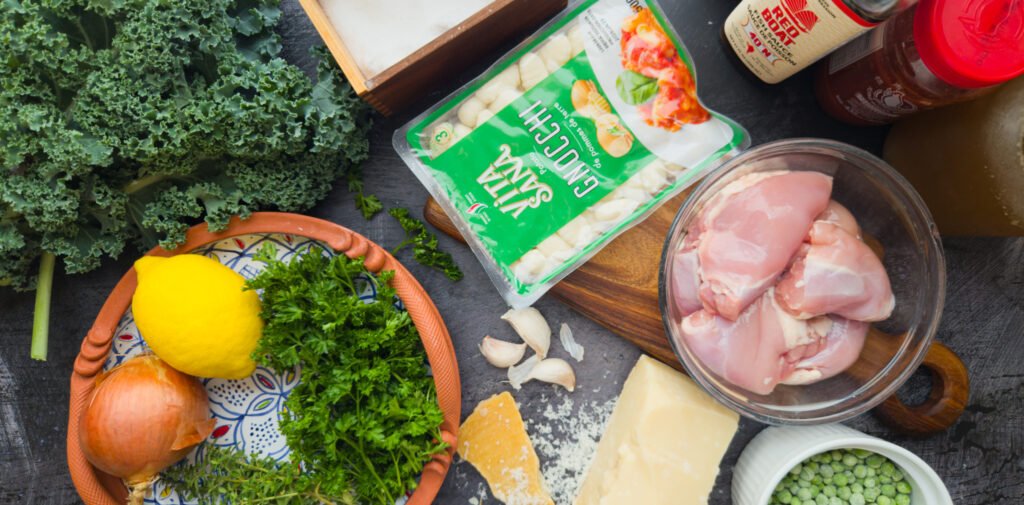
- 1.5 lbs boneless chicken thighs chopped
- 2 tbsp extra virgin olive oil
- 3 tbsp unsalted butter
- 1 yellow onion diced
- 3 garlic cloves minced
- 1 cup dry white wine
- 4 cups chicken stock
- 2 cups heavy cream
- juice of 1 lemon
- zest of 1 lemon
- 500 g gnocchi
- 1 tsp fish sauce
- 1 tbsp sambal oelek
- 1 cup peas frozen, fresh or canned
- 2 cups spinach chopped
- 1 cup parmigiano reggiano parmesan is fine
- 1 parmegiano reggiano rind, about 2 x 3 inches
- 1/4 cup fresh parsley finely chopped
- salt and pepper to taste
Instructions
- Heat the olive oil in a large pot over medium-high heat. Add the chicken and sear until lightly browned.
- Reduce the heat to medium and add the butter. Once melted, add the onion and cook for 5–7 minutes, stirring occasionally, until softened and translucent without taking on much color. Add the garlic and cook for another minute.
- Pour in the white wine, scraping up any browned bits (the fond) from the bottom of the pot. Simmer until the wine has reduced by about half.
- Add the chicken stock, cream and Parmigiano Reggiano rind, if using. Bring to a gentle simmer, then reduce the heat to medium-low. Cook uncovered for 12–15 minutes, maintaining a gentle simmer rather than a boil.
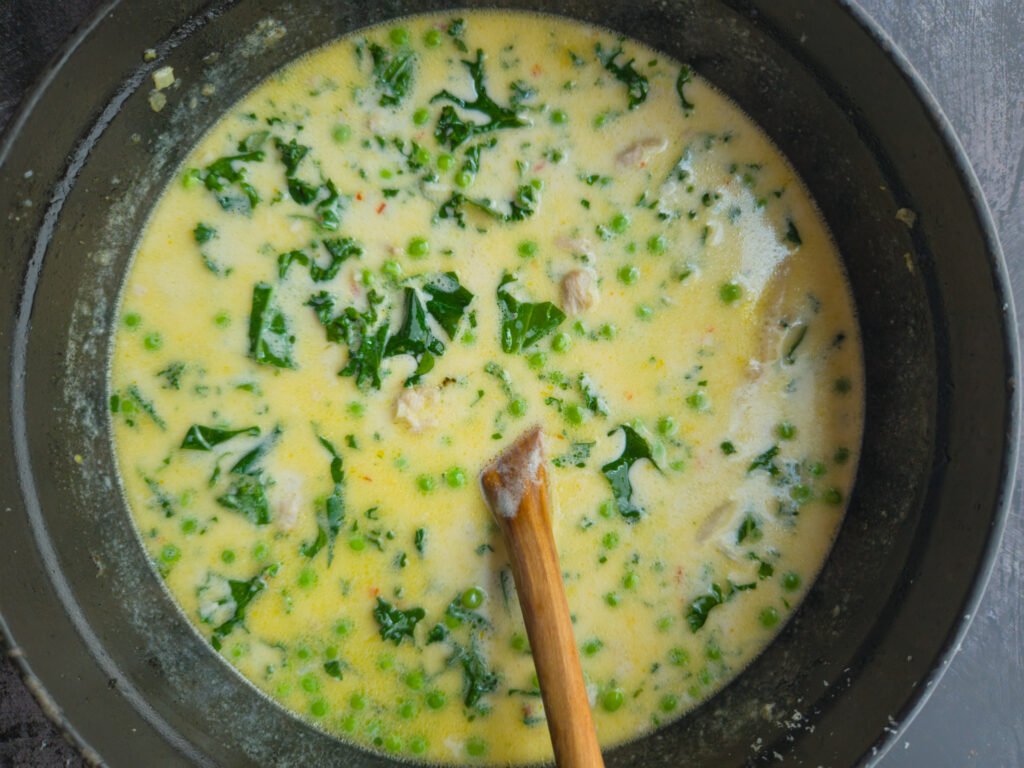
- Add the lemon zest, fish sauce, sambal oelek and peas. Cook for 3–4 minutes, then add the baby spinach and stir until wilted.
- Add the gnocchi and cook for 1–2 minutes less than the package directions. The gnocchi will continue to soften in the hot soup after it is removed from the heat.
- Remove the pot from the heat. Stir in the grated Parmigiano Reggiano, lemon juice and parsley until the cheese has melted into the soup. Taste and adjust the seasoning with salt and freshly ground black pepper.
- Ladle into bowls and finish with freshly grated Parmigiano Reggiano and chopped parsley, if desired. Serve immediately.
Why This Chicken Gnocchi Soup Recipe Works
A great chicken gnocchi soup should be rich and comforting without tasting heavy or one-dimensional. This version builds that balance by developing flavour in layers, then using acidity, fresh vegetables and a little heat to cut through the richness of the cream and Parmigiano Reggiano.
Building flavour from the start
Lightly browning the chicken does more than cook the meat—it develops deeper roasted flavours and leaves behind a flavourful base for the soup. The onions are cooked more gently in butter until translucent, followed by garlic and white wine. Reducing the wine before adding the stock and cream concentrates its flavour while leaving enough acidity to balance the richer ingredients that follow.
Layers of savoury flavour
Chicken stock provides the foundation, but Parmigiano Reggiano and a Parmigiano rind add another layer of savoury depth as the soup gently simmers. A small amount of fish sauce builds on that even further. It isn’t there to make the soup taste like fish; used sparingly, it adds complexity and helps intensify the savoury flavours already present in the chicken, stock and cheese.
Rich, but still balanced
Butter, cream, Parmigiano and gnocchi make this a decidedly comforting soup, so the brighter ingredients matter just as much. White wine and fresh lemon provide acidity, while spinach, peas and parsley bring freshness. Sambal oelek adds a subtle background heat that helps keep all that richness from becoming monotonous.
Finishing the soup matters
The final ingredients are added deliberately. The gnocchi is cooked just shy of its full cooking time so it can finish in the residual heat without becoming overly soft. Once the soup comes off the heat, Parmigiano Reggiano adds body and savouriness, while fresh lemon juice and parsley retain more of the brightness and freshness that would otherwise be lost during a long simmer.
The result is a creamy chicken gnocchi soup that still tastes distinctly of chicken, vegetables, herbs and Parmesan—not simply cream. It’s familiar comfort food, but with a little more attention paid to how each ingredient contributes to the finished bowl.
Chef’s Notes
- Build flavor before adding the cream. Cream provides richness and body, but it can also soften other flavors. Building layers of flavor throughout the cooking process gives the finished soup more depth and balance.
- No thickener is required. The cream provides most of the soup’s body, while the gnocchi releases a small amount of starch as it cooks. If you prefer a thicker soup, a small amount of roux can be added to adjust the consistency.
- Add the gnocchi at the end. Gnocchi will continue to soften as it sits in the hot soup. If making the soup ahead, leave the gnocchi out and add it while reheating. Alternatively, cook the gnocchi separately—boiled or pan-fried—and add it directly to each bowl.
- Keep the heat gentle once the cream and Parmigiano Reggiano are added. Avoid a hard boil, which can cause the dairy to separate and create a grainy texture. Gentle heat helps keep the soup smooth and velvety.
- Season in stages. Lightly season throughout the cooking process, then make your final adjustment before serving. Parmigiano Reggiano adds saltiness of its own, so leaving room for that final adjustment helps prevent over-seasoning.
Ingredient Notes & Substitutions
- Chicken: Chicken thighs are preferred for their richer flavor and ability to stay tender during the longer cooking time. If using chicken breast, sear it as directed, then remove it from the pot and return it during the final few minutes of cooking to prevent it from drying out.
- Dry White Wine: White wine adds acidity and subtle sweetness, helping balance the richness of the cream and butter. It can be omitted if unavailable without significantly changing the recipe.
- Gnocchi: Packaged gnocchi works particularly well in this soup because its firmer texture holds up better in the broth. Choose smaller gnocchi that can share a spoonful with the chicken and vegetables for a balanced bite. If using fresh homemade gnocchi, cook it separately and add it to individual bowls just before serving.
- Lemon: Lemon zest provides the aromatic citrus flavor, while the juice adds acidity that cuts through the richness of the soup. For a less pronounced lemon flavor, omit the zest and use only the juice. For no lemon flavor at all, substitute the juice with 1–2 tablespoons of white wine vinegar, adding it gradually to taste.
- Fish Sauce & Sambal Oelek: These may seem unconventional, but both work as background seasonings. Fish sauce adds savory depth and umami, while sambal oelek provides subtle chile complexity. Used in small amounts, neither should make the soup noticeably fishy or spicy—they simply add another layer of flavor.
Substitutions & Variations
- Baby Spinach: Kale or Black Kale makes an easy substitute. Add it near the end of cooking and allow it to wilt before serving.
- Chicken: Leftover or rotisserie chicken works well. Skip the searing step and add the cooked chicken toward the end, giving it just enough time to heat through.
- Make It Spicier: Increase the sambal oelek or finish individual bowls with a small spoonful for additional heat.
- Crispy Gnocchi: For a different texture, pan-fry the gnocchi separately until golden and crisp, then add it directly to each bowl when serving.
Storage/Reheating
Refrigerating: Store leftover Chicken Gnocchi Soup in an airtight container in the refrigerator. The gnocchi will continue to absorb liquid and soften as the soup sits, so the texture will be best within the first few days.
Keeps for: 3-4 days in the refrigerator
Freezing: This soup can be frozen, although the cream and gnocchi will not have quite the same texture as when freshly made. Packaged gnocchi holds up reasonably well, but it will soften after freezing and reheating. For the best result, keep some packaged gnocchi on hand and add freshly cooked gnocchi when reheating the soup. Freeze in an airtight container and thaw in the refrigerator before reheating gently.
Keeps for: 2-3 months in the freezer
Reheating: Reheat only the amount you plan to serve over low to medium-low heat, stirring occasionally until heated through. Avoid boiling the soup, as high heat can affect the texture of the cream and Parmigiano Reggiano. If the soup has thickened in the refrigerator, loosen it with a small amount of chicken stock before serving.