
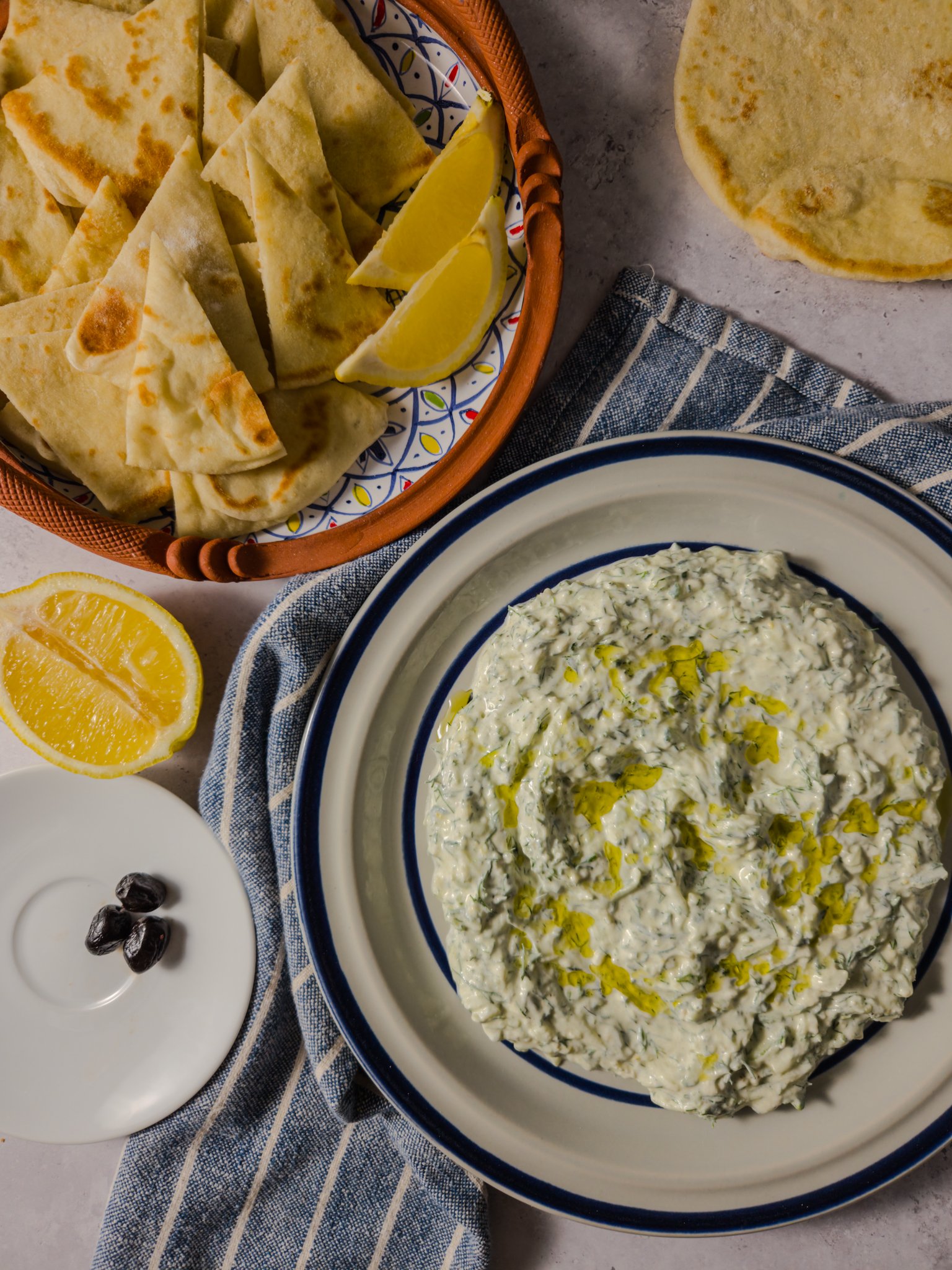
Cool, creamy and unapologetically garlicky, this tzatziki keeps things simple and lets good ingredients do the work. Full-fat Greek yogurt and properly drained cucumber give it a thick, rich texture, while fresh dill, extra virgin olive oil and lemon bring everything together. A small amount of lemon zest adds an extra pop of citrus without taking over the fresh, garlicky flavour that makes a great tzatziki so good.
Creamy Greek Tzatziki with Lemon and Dill
Ingredients
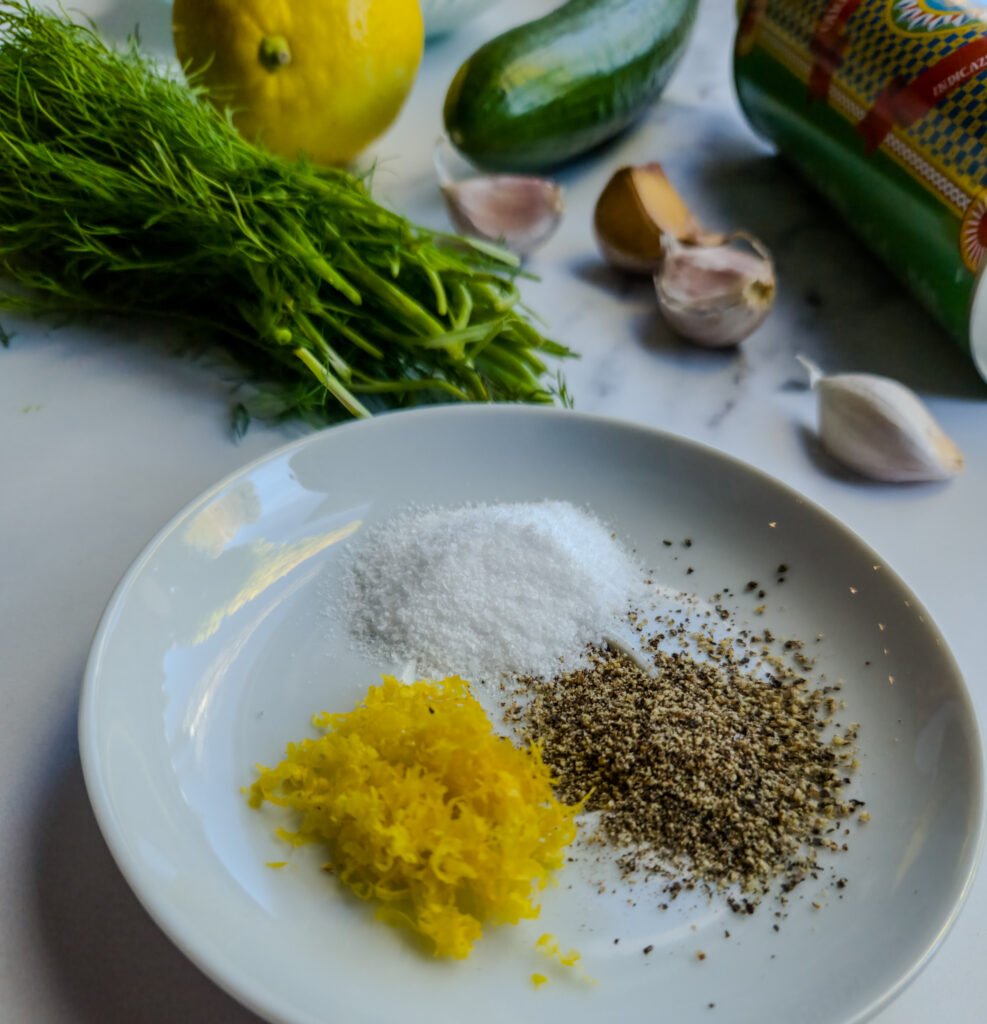
- 500 g full fat Greek yogurt
- 1 English cucumber (or regular cucumber, deseeded)
- 2-3 garlic cloves, finely grated
- 1 lemon, juiced
- 1/2 tsp finely grated lemon zest
- 1/4 cup extra virgin olive oil, plus more for finishing
- 2 tbsp finely chopped fresh dill
- kosher salt, to taste
- freshly ground black pepper, to taste
Instructions
- Prepare the cucumber. Coarsely grate the cucumber and place it in a fine-mesh strainer. Season lightly with kosher salt and let sit for 10–15 minutes to draw out excess moisture. Transfer to a clean kitchen towel and squeeze firmly to remove as much liquid as possible.
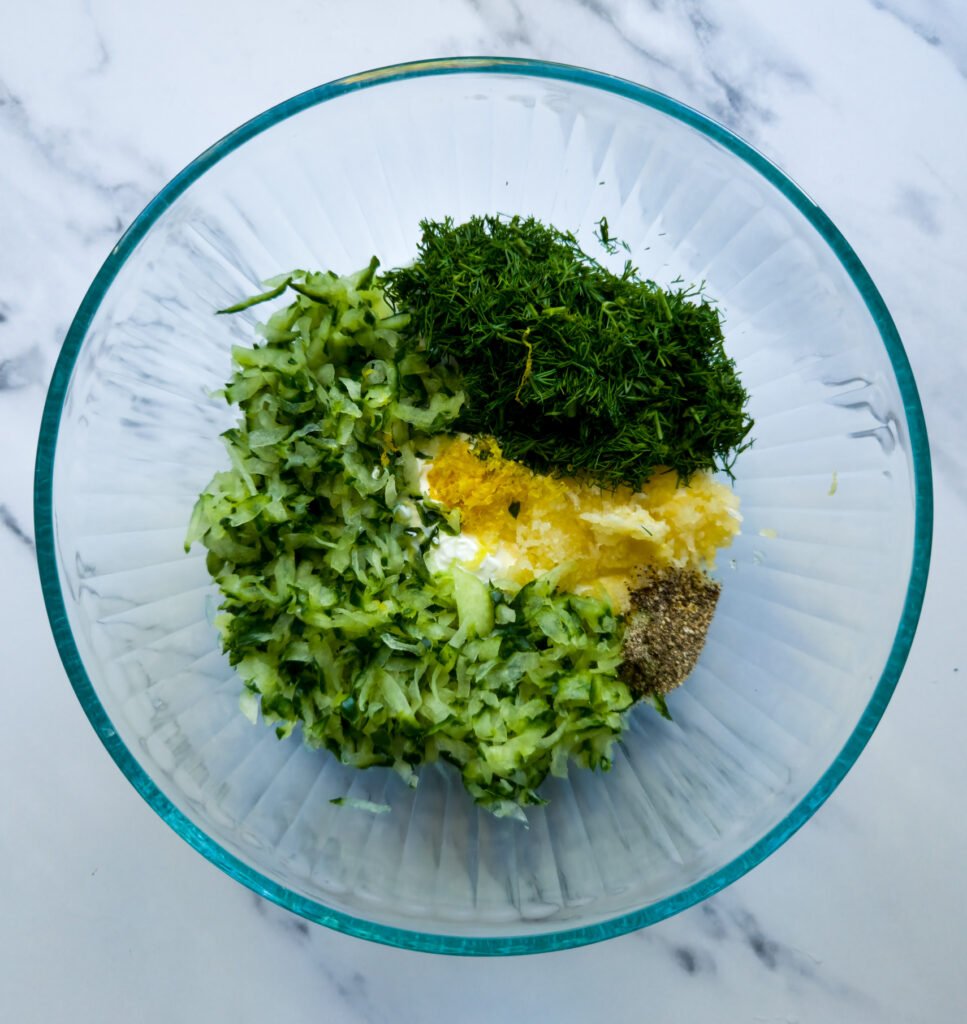
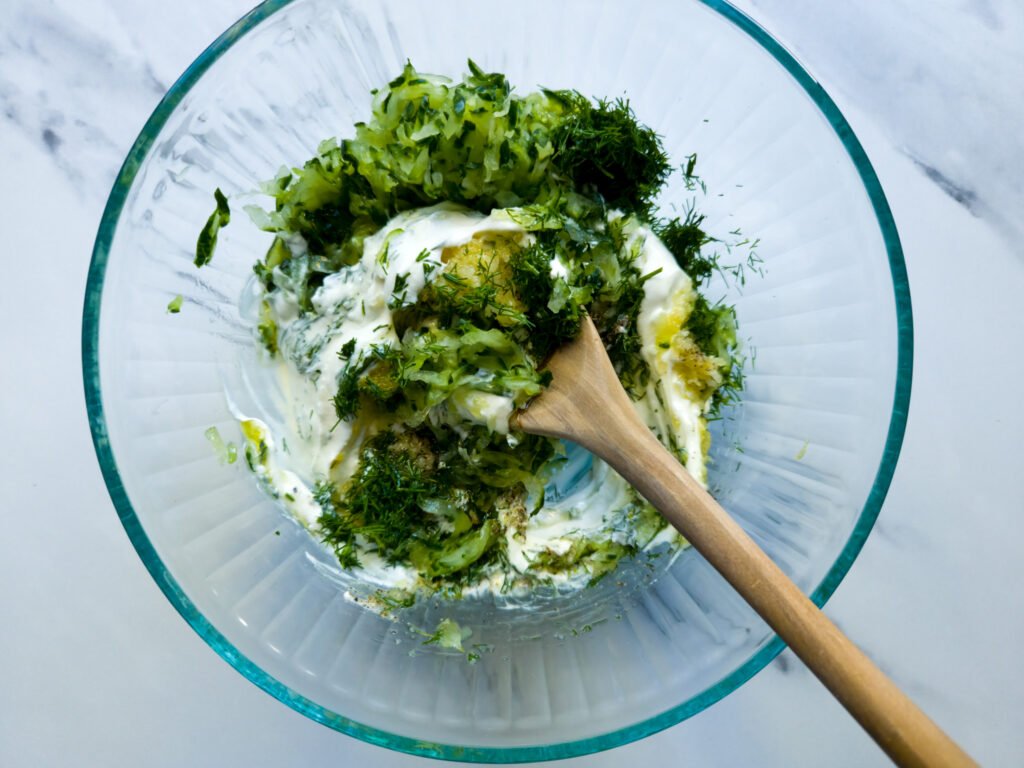
- Build the tzatziki. Add the full-fat Greek yogurt to a large bowl along with the drained cucumber, finely grated garlic, lemon juice, lemon zest, extra virgin olive oil and chopped dill. Stir until everything is evenly incorporated.
- Season and rest. Season with kosher salt and freshly ground black pepper to taste. Cover and refrigerate for at least 30 minutes before serving to allow the garlic, dill and lemon to settle into the yogurt. Taste again after resting and adjust the seasoning if needed.
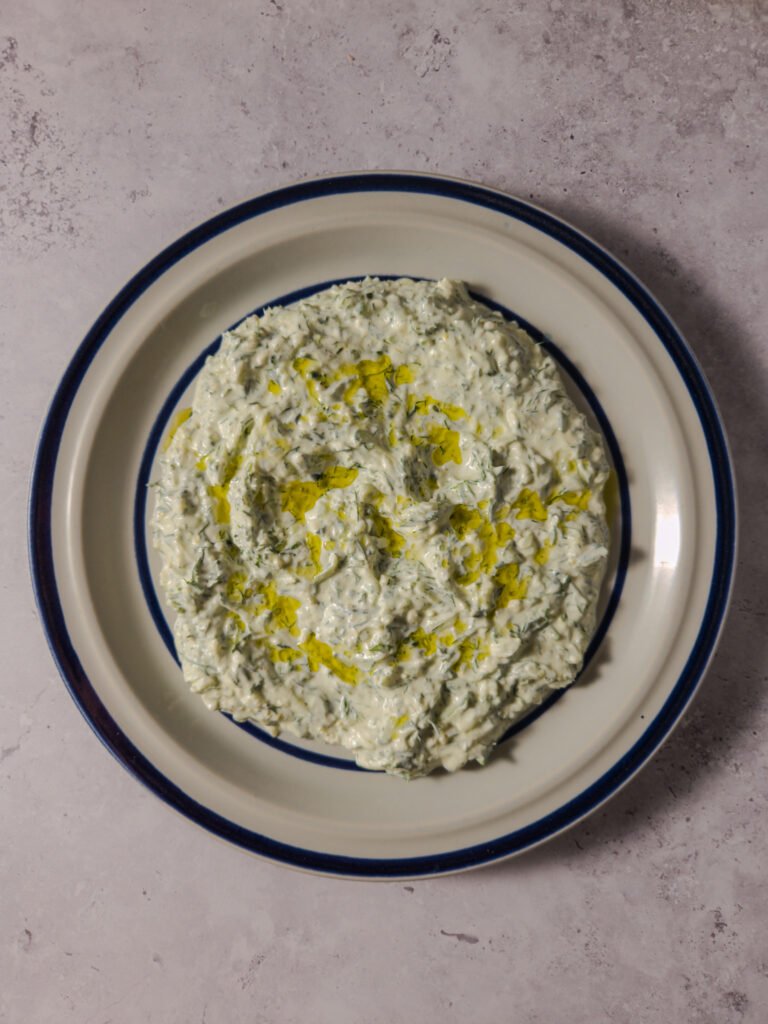
- Finish. Spoon the tzatziki into a serving bowl and finish with a generous drizzle of extra virgin olive oil and a little fresh dill.
Why This Tzatziki Works
- Get the water out of the cucumber. Probably the most important technique in the recipe. Salt draws moisture out; squeezing it thoroughly keeps the tzatziki thick and creamy rather than becoming watery as it sits.
- Full-fat Greek yogurt matters. This isn’t just about richness. You’re starting with a thicker, fuller-bodied base that can handle the cucumber, lemon juice and olive oil without becoming loose.
- Use lemon two ways. The juice brings acidity; the small amount of zest brings aroma. That lets you increase the lemon “pop” without adding more juice and pushing the tzatziki toward sour or thinning it out.
Let It Rest
Tzatziki is good as soon as it’s mixed, but it gets better with a little time. Freshly grated garlic can taste particularly sharp when it first hits the yogurt. A short rest gives that garlic time to settle into the mixture while the dill and lemon zest begin to work their way through it.
Give the tzatziki at least 30 minutes in the fridge before serving, then taste it again. This is also the best time to make your final adjustment with salt, pepper or lemon juice. You’re seasoning the tzatziki as it will actually taste on the table, rather than immediately after mixing.
Important Ingredient Notes
Full-Fat Greek Yogurt
Full-fat Greek yogurt gives tzatziki the rich, thick base we’re looking for. Lower-fat yogurts tend to be thinner and don’t have quite the same body, especially once the cucumber, lemon juice and olive oil are mixed in. Start with a good, thick Greek yogurt and let the other ingredients loosen it naturally.
Cucumber
A seedless English cucumber works particularly well here because it has fewer seeds and a little less water to deal with. A regular cucumber works just fine too—simply cut it lengthwise and scoop out the seeds before grating. Whichever you use, getting the excess moisture out after grating is far more important than the variety.
Garlic
Two to three cloves give this tzatziki plenty of fresh garlic flavour without overpowering the cucumber, dill and lemon. Finely grate the garlic rather than chopping it so the flavour is evenly distributed throughout the yogurt. Start with two cloves if your garlic is particularly large or strong—you can always add more after tasting.
Extra Virgin Olive Oil
Use an extra virgin olive oil you genuinely enjoy the taste of. There’s no heat involved here to hide it, and we’re using it both in the tzatziki and as a finishing oil. A good olive oil adds richness and a slightly fruity, peppery character that works particularly well against the cool yogurt and cucumber.
Storage
Store tzatziki in an airtight container in the refrigerator for up to 3–4 days. Give it a good stir before serving, as a little moisture may naturally collect on the surface as it sits.
Tzatziki is best enjoyed fresh and does not freeze particularly well. Freezing can cause the yogurt and cucumber to separate, leaving the texture watery or grainy once thawed.